Clay, chalk, iron: how the composition of the soil shapes the style of Skip to content
Free delivery from 100€ in France I SHIPPED FROM OUR DOMAIN IN AVIZE

Cart

Your cart is empty

Argile, craie, fer : comment la composition du sol façonne le style d'un Champagne

Clay, chalk, iron: how the composition of the soil shapes the style of a Champagne

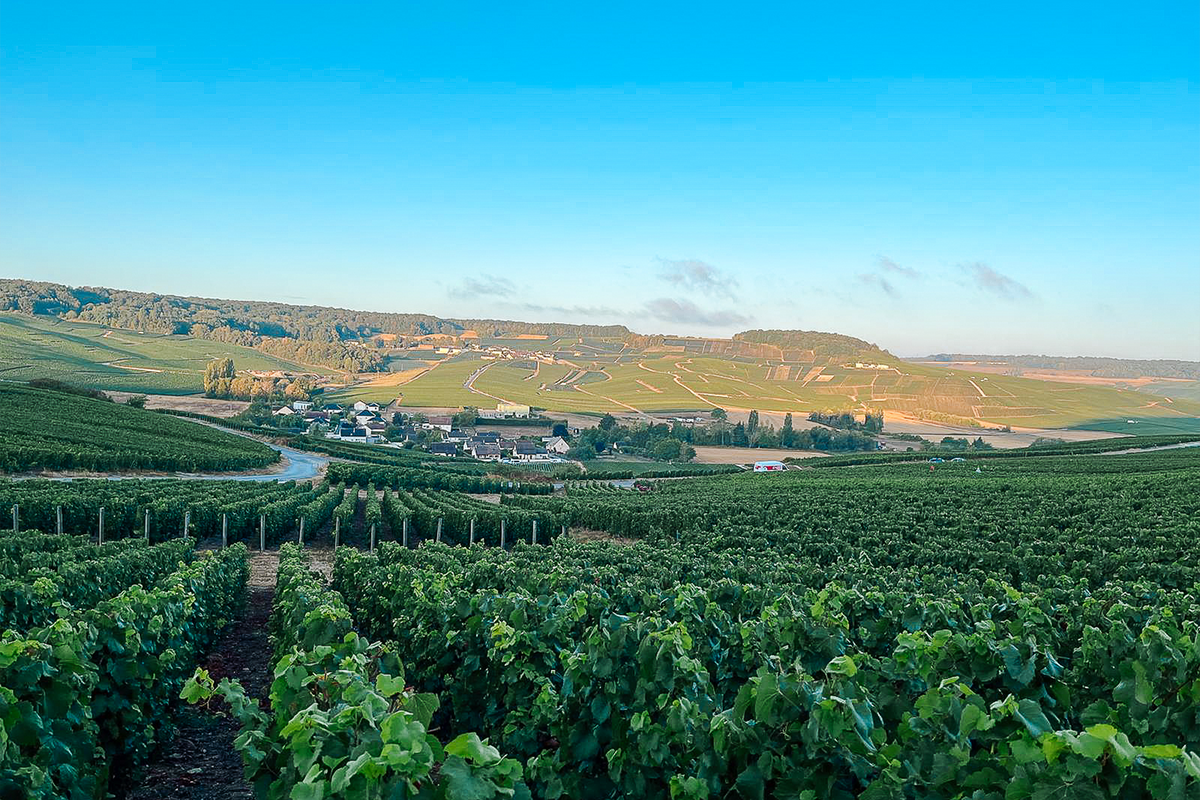
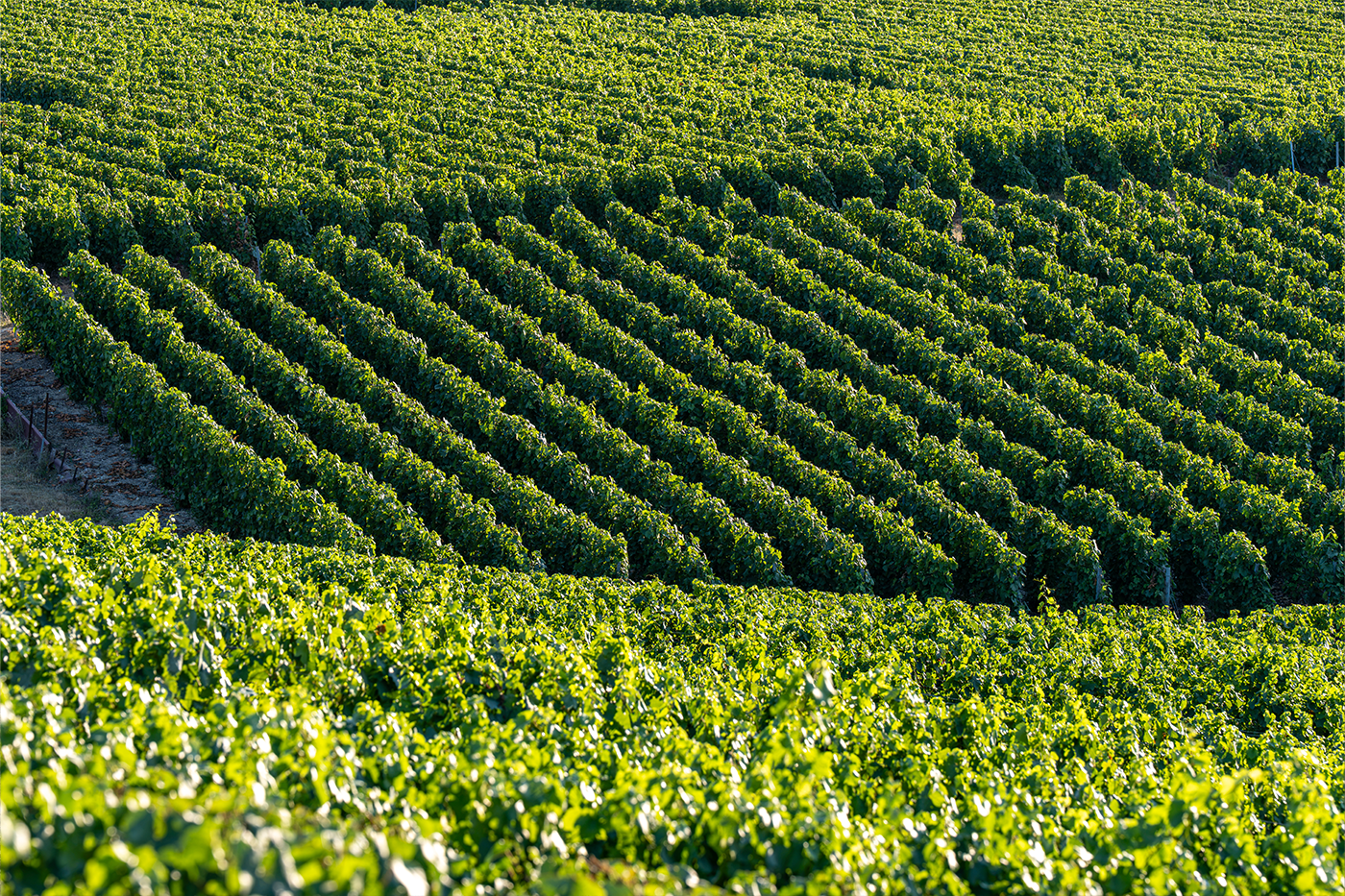
Two Chardonnay vines, planted a few hundred meters from each other on the same Côte des Blancs, can produce wines of radically different identities. The reason lies neither in the grape variety nor the winemaker's expertise, but beneath their feet: the composition of the soil. Clay, chalk, iron oxides: each of these elements leaves a precise signature in the grape, and subsequently in the wine. To understand this mechanism is to understand why terroir remains, in Champagne, the most determining factor in a cuvée's style.

Soil, a silent shaper of Champagne style

Even before talking about grape varieties or winemaking, the soil conditions how the vine feeds, manages water, and transfers its mineral resources to the grape. Its texture—that is, the proportion of clay, silt, and sand it contains—determines its ability to retain or drain water, and therefore the vine's ripening rhythm. It is this invisible mechanism, far more than the weather alone, that shapes the essence of a Champagne's profile.

Soil texture: clay, silt, sand, each has its role

Soil scientists classify soil particles by size: clay, the finest (less than 2 microns), silt, then sand, up to gravel and stones. This granulometry is not a technical detail; it directly governs the soil's water behavior. A clay-rich soil retains water and releases it slowly to the vine, while a sandy or gravelly soil drains quickly and exposes the vine to more pronounced water stress. On the Côte des Blancs, it is often the coexistence of these textures, in varying proportions depending on the plot, that explains the stylistic diversity of the appellation's Chardonnays.

Soil, an interface between deep geology and the vine

To understand a terroir in depth, the most rigorous winemakers rely on the study of soil pits: trenches dug through the ground that reveal a succession of horizons, each characterized by its color, texture, and composition. This vertical reading of the soil, from the shallowest to the deepest layer, makes it possible to know precisely at what depth vine roots draw their water and mineral elements—information much more reliable than mere surface observation. It is in this spirit that the Maison Frerejean Frèrescalled upon an expert in pedology and geo-sensory tasting to analyze its plots in the Côte des Blancs in depth. This approach, still rare in Champagne, makes it possible to link the nature of the soil very concretely to the sensations perceived in the wine, and to refine the understanding of each terroir year after year.

Clay: roundness, coating and texture

Where it dominates, clay gives the wine an ample and enveloping substance. Its plastic texture, sometimes described as a "modeling clay" effect by soil scientists, retains water and nutrients, nourishing the vine gradually and steadily throughout the vegetative cycle. This stable water balance translates on the palate into a sensation of roundness, generosity, and almost fleshiness.

A texture that retains water and gradually nourishes the vine

Unlike free-draining soil, well-structured clay limits water spikes: it spares the vine from sudden phases of stress that can stall ripening. This consistency has a direct impact on the grapes, which accumulate their substance more homogeneously. This is one of the reasons why clay soils are often associated, in tasting, with fleshy and rounded wines rather than tense or austere ones.

Iron oxides: a singular aromatic signature

Some clays feature so-called hydromorphic zones, where the alternation between water saturation and drying causes iron to migrate through the soil. This iron redeposits in the form of colored concretions—rusty, ochre, sometimes almost orange—visible to the naked eye in the soil profile. This unique mineral signature is found during tasting as slightly metallic or ferrous notes, perceptible particularly on the finish, which add depth and prolong the aromatic persistence of Champagne.

Chalk: freshness, salinity and longevity

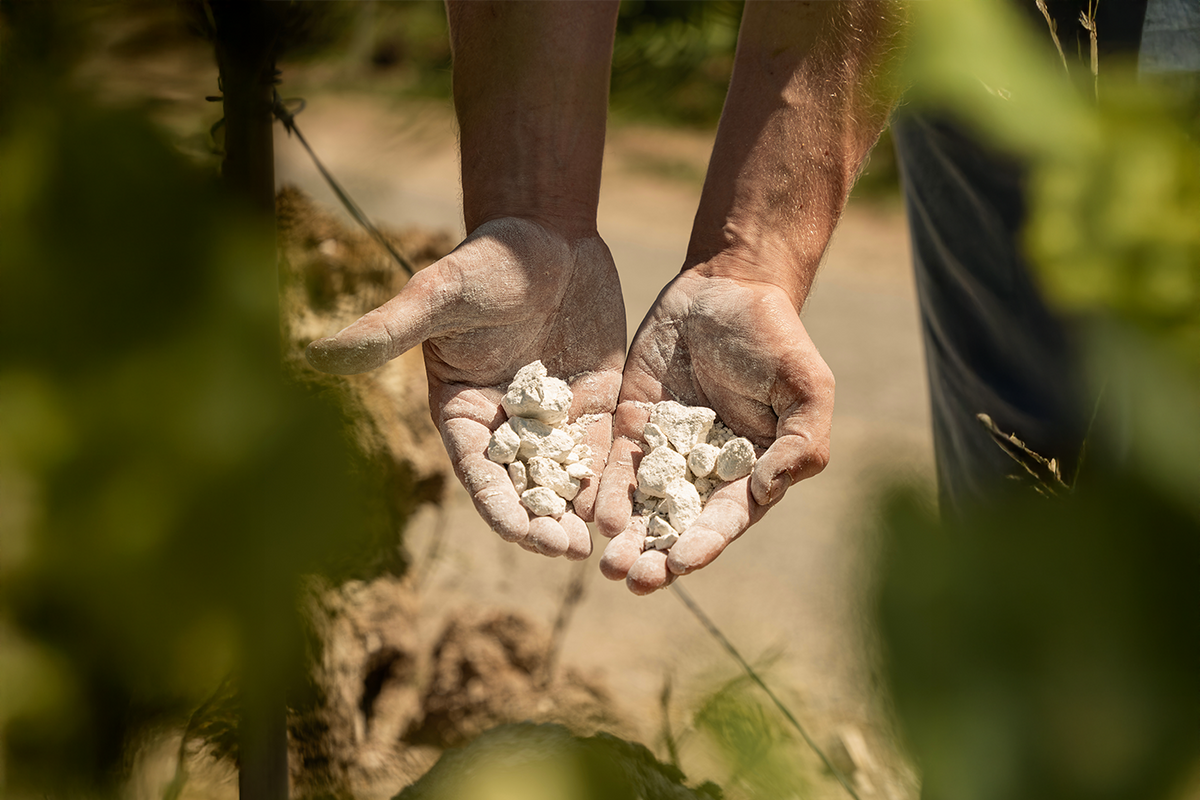
In contrast to clay, chalk—a limestone rock formed approximately 75 million years ago at the bottom of a warm, shallow sea—imposes a completely different grammar on the wine: that of freshness, precision, and aging potential. Its porous structure and high calcium carbonate content make it one of the most iconic, and most sought-after, soils in all of Champagne.

A porosity that naturally regulates water

Chalk possesses remarkable porosity: it absorbs excess rainwater and then releases it very gradually to the vine through capillarity, even during dry periods. This natural drainage, without excess or deficiency, subjects the vine to a slight, regular water stress, a factor known to promote aromatic concentration and acidic tension in the grape, without ever compromising its water supply.

The saline minerality, a hallmark of Champagne's marine past

Champagne chalk was formed from fossilized marine microorganisms, coccolithophores, whose calcareous shells accumulated at the bottom of a sea that has since disappeared. This marine origin explains the saline and chalky sensation perceptible in wines from chalky soils, a kind of mineral memory that spans the millions of years between the formation of the rock and the tasting of the wine. It is also this calcareous structure that gives Champagnes from these soils a particularly long aging potential, as the chalk provides the framework necessary to withstand several years, or even decades, of evolution in the cellar.

Clay and chalk are not opposites: they complement each other. The former provides substance, roundness, and a unique mineral touch; the latter offers freshness, salinity, and longevity. It is precisely this diversity of soils, present across the Côte des Blancs, that allows winemakers to create blends of great aromatic richness, where every component of the terroir finds its place.

At Frerejean Frères, this conviction has translated into a concrete approach: calling upon an independent expert to conduct a detailed study of our plots in the Côte des Blancs, in order to better understand the link between soil and wine and to refine our interpretation of the terroir, cuvée after cuvée. A philosophy found in each of our cuvées, crafted from Côte des Blancs Chardonnays and patiently revealed through long aging in our cellars.